No perfect brief required
Start with the business problem or requirement you currently understand.
Get a Consultation
Share your operational requirement, current setup and business context before AGH defines an appropriate next step. You do not need to arrive with a finished solution.
Start With the Requirement
AGH first needs to understand the operation before defining the right Service, role, team, project, system or Engagement Model. The requirement may involve People + Process + Technology rather than one predefined package.
You can explain what is happening now, what is creating the requirement and what you already know. The consultation is where the operating context can be clarified further.
Start with the business problem or requirement you currently understand.
The operating structure follows the requirement rather than forcing a preset package.
Current software, workflows and reporting can remain part of the operating environment where appropriate.
What We Will Discuss
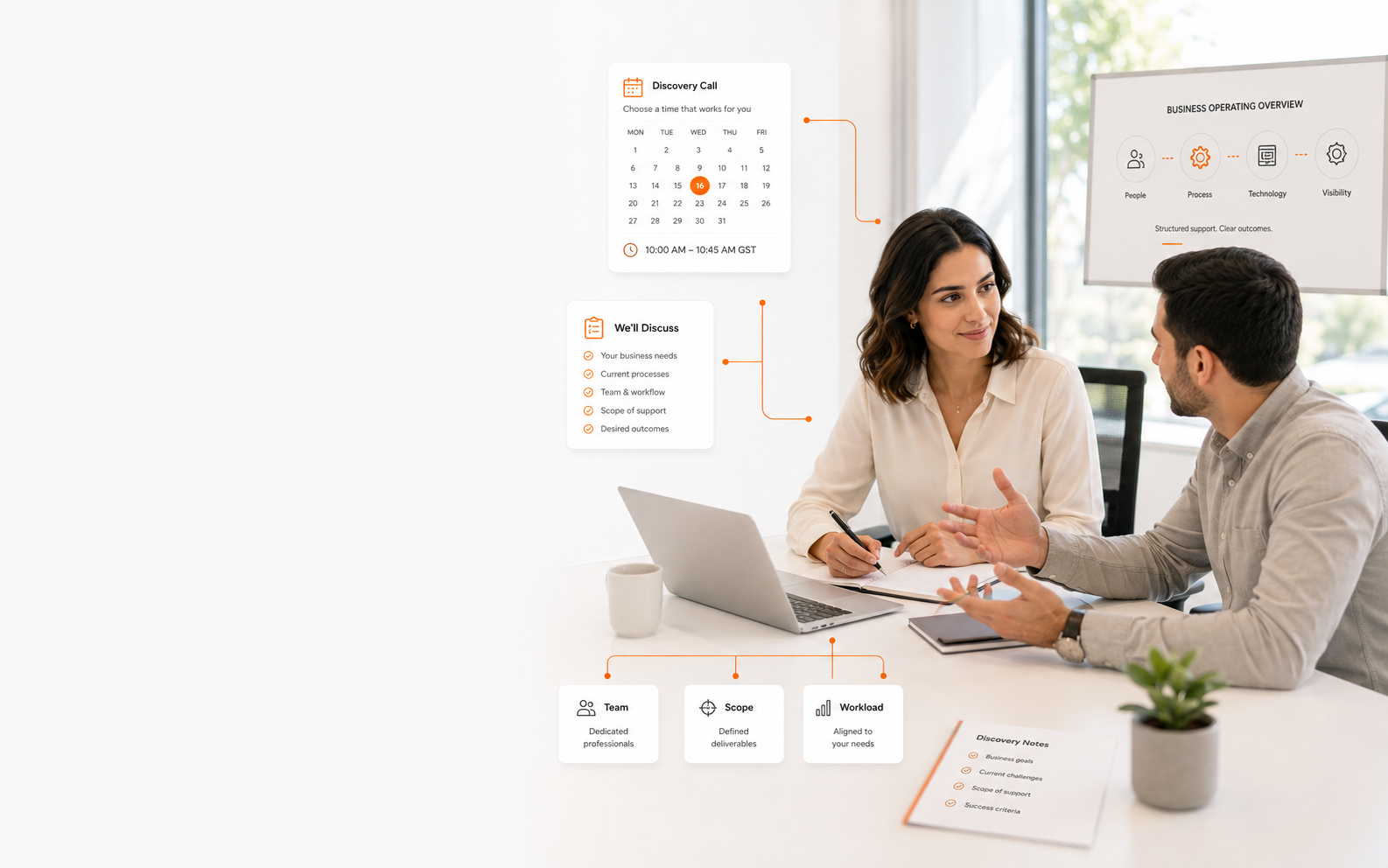
The exact conversation depends on the requirement, but these areas help AGH understand the business before defining the next step.
The relevant organisation, department or operational function behind the requirement.
What is creating the need for additional capacity, clearer process or operational support.
How the work is handled now and the approximate operating load around it.
The likely role, Service, project, system or team direction where already known.
The CRM, workflow, industry, reporting or internal systems already supporting the work.
Relevant working hours, responsibilities, team structure, management and reporting where known.
Two-Step Journey
First provide enough information for a useful conversation. Meeting selection then belongs to the approved booking integration rather than a fabricated calendar.
Provide the business and operational context that will make the conversation more relevant.
Select an available time only through the approved meeting-booking system once it is connected.
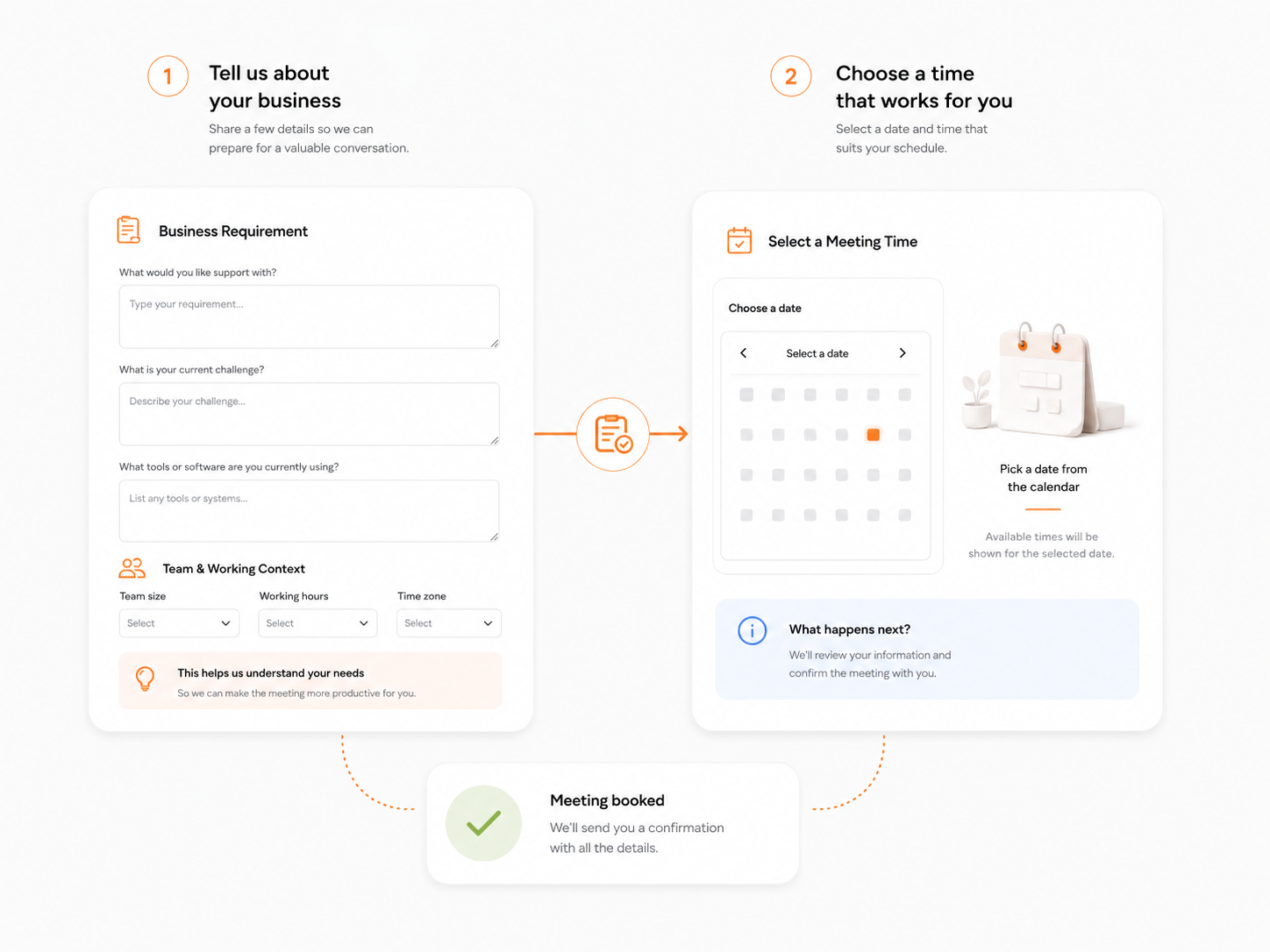
This approved visual explains the intended form-to-calendar journey. It does not represent live availability or a confirmed booking provider.
Get a Consultation
Share enough context for AGH to understand the requirement before moving to meeting selection.
Step 1
This is a starting point, not a full consulting brief. Name, Business Email and Current Challenge are required for server-side validation; the remaining fields provide useful context where relevant.
What to Expect
The conversation is designed to clarify the operating requirement—not to force an engagement or promise an immediate quotation before scope is understood.
Understand the business, current challenge and operating context.
Clarify workload, systems, working model and support requirements where relevant.
Move toward a clearer scope where an appropriate engagement direction exists.
AGH may support the agreed operating scope, while the client retains strategic direction, commercial decisions, final approvals, management priorities and final operational authority.
Existing Systems
AGH should understand the current operating environment before recommending unnecessary changes. Where appropriate, AGH support can work within existing client systems, workflows, SOPs and reporting structures.
This does not imply automatic integration, universal compatibility or mandatory system replacement.
What Happens Next
Where there is a suitable direction, the requirement can move toward a defined scope and the relevant commercial structure.
Not Ready for a Consultation?
Use Contact AGH for general questions, information requests or an early-stage enquiry when you are not ready for a structured business discussion.
Get a Consultation
Share the current requirement and move toward a structured conversation about the support model that may be appropriate.
Frequently Asked Questions
Practical answers about what the consultation is for, what information is useful and what may happen next.
It is a structured initial business conversation used to understand the operational requirement before determining the most appropriate next step.
Depending on the requirement, the discussion may cover the current operation, challenge, team, workload, working hours, existing systems, required support and possible engagement direction.
No. Choose Not Sure Yet where appropriate and describe the current requirement. The conversation can help clarify which direction may fit.
Not necessarily. The requirement may involve one role, several roles, Setup & Systems, Project-Based Support, Technology or another appropriate structure.
Where appropriate, yes. AGH can understand your current environment first and may work within client systems where relevant. This does not imply automatic integration or system replacement.
Pricing depends on the defined scope. AGH uses a custom proposal based on the operational requirements rather than promising immediate pricing before the requirement is clarified.
Where there is a suitable direction, the next step may involve clarifying the requirement, defining scope, identifying the relevant Engagement Model and preparing a custom proposal.
Use the Contact page for general questions, information requests and early-stage enquiries.