People
The professionals required to support the agreed operational function where personnel are part of the engagement.
- Defined role or team requirement
- Recruitment and selection where required
- Client-approved operating boundaries
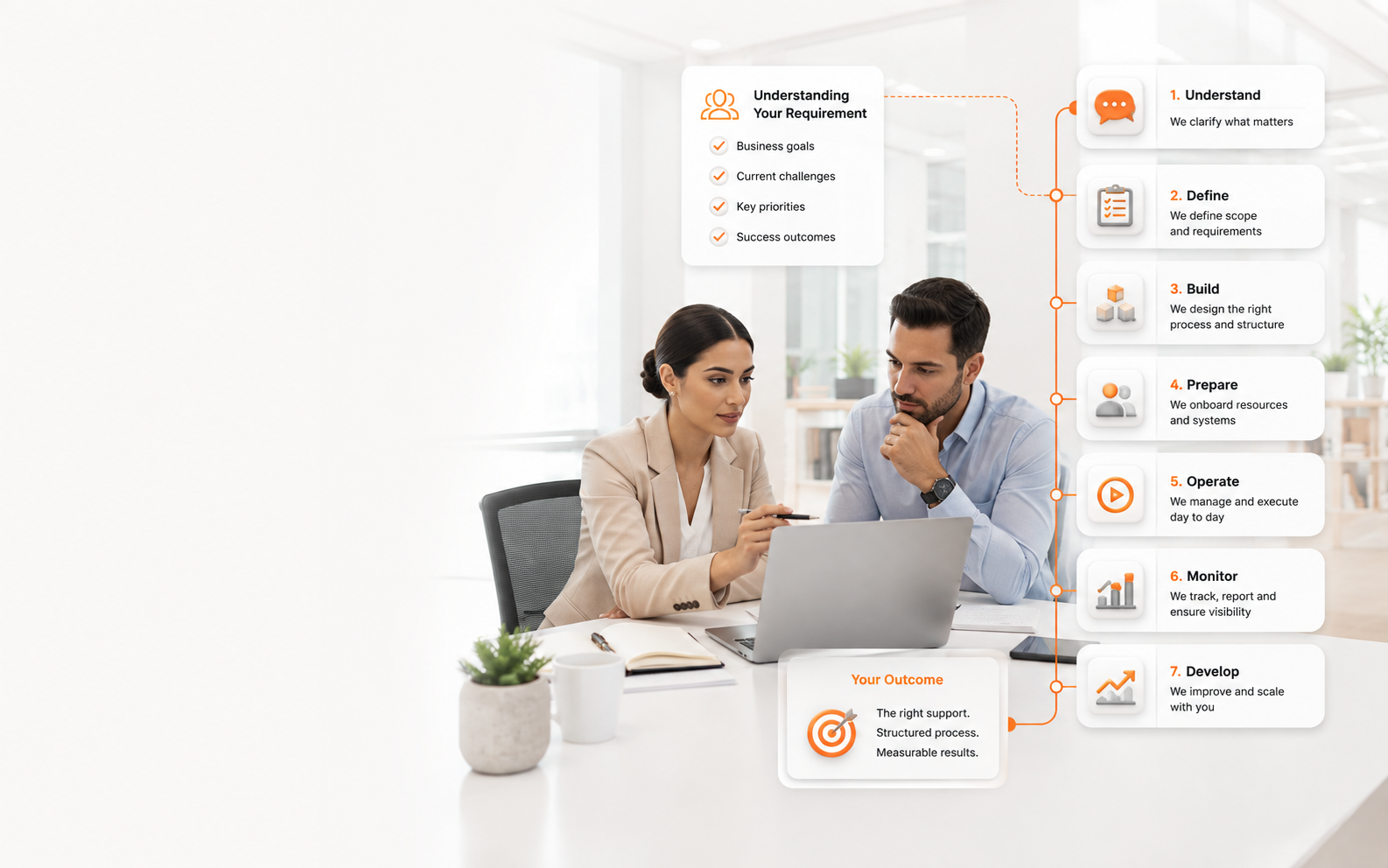
AGH starts by understanding what your operation actually needs. We then define the structure, prepare the relevant people, process and technology, move into the agreed operating environment, maintain management visibility and develop the support when requirements change.
The AGH framework moves from understanding the requirement into a defined operating model. The seven stages stay consistent, while the activities inside them adapt to the service, team, project, system or operational requirement being supported.
This means a managed-team engagement may include recruitment and selection, while a website, data, project or setup engagement may use the same framework without recruiting a new person.
The framework is designed to make the engagement understandable without turning it into a rigid implementation programme.
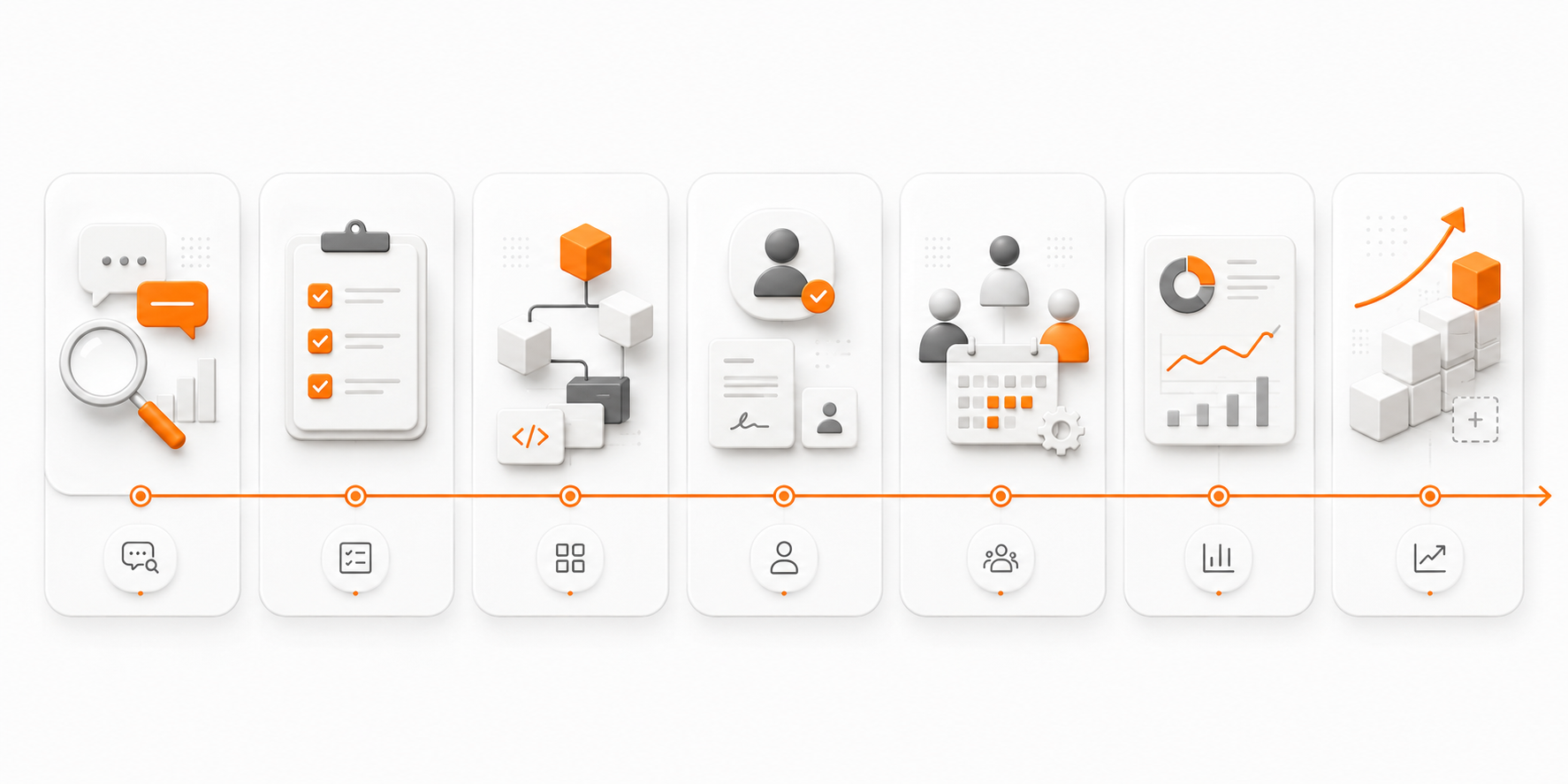
Each stage has a clear purpose. The exact tasks vary by engagement, but client control, scope boundaries and existing-system compatibility remain consistent principles.
Understand the business before defining the support model. We review the relevant function, current challenge, people involved, workload, existing systems and expected operational outcome.
A clearer definition of what requires support and the most appropriate AGH engagement direction.
Turn the requirement into a defined operating scope before work begins. Where relevant, this includes the role, responsibilities, hours, deliverables, KPIs, reporting, systems and approval boundaries.
A practical operating definition that provides the basis for the proposal and Build stage.
Prepare the people, process, systems and working environment required by the agreed scope. Recruitment is included only when the engagement actually requires a new dedicated person or managed team.
The relevant people, workflow, systems, documentation and access are prepared for onboarding.
Prepare the person, team or service environment to work inside the client's business context rather than forcing the client into an unrelated generic operating model.
The agreed team or service environment is ready to begin normal operations. No fixed onboarding duration is assumed.
Begin the agreed service inside the defined responsibilities and client operating environment. Work stays connected to the systems, priorities, communication and approvals defined for the engagement.
The client retains business direction, operational priorities, approvals, commercial decisions and final management authority.
Maintain management visibility through the agreed combination of systems, task status, reporting, dashboards, KPIs, performance review, escalation and AGH technology where configured.
Management remains connected to relevant operational information without positioning visibility as employee surveillance.
Review what is working and change the support only where the operation requires it. Development may involve training, revised workflows, responsibilities, hours, team size, reporting or technology.
A support model that can develop with the business without assuming automatic expansion or unlimited capacity.
A dedicated managed team, project-based engagement, website project, data/reporting engagement or platform setup can move through the same seven-stage logic with different activities inside each stage.
AGH connects the people required for the agreed work with the process structure and technology needed to execute, report and manage it.
The professionals required to support the agreed operational function where personnel are part of the engagement.
Responsibilities, workflow, relevant SOPs, communication, reporting, escalation and KPIs where required.
Client systems first, with AGH technology added only where the engagement requires additional visibility or operational support.
Technology supports the operating model. It does not replace people, client direction or management judgement.
AGH should understand the client's current CRM, project tools, Home Care software, task systems, spreadsheets, reporting tools, communication channels and internal software before recommending unnecessary change.
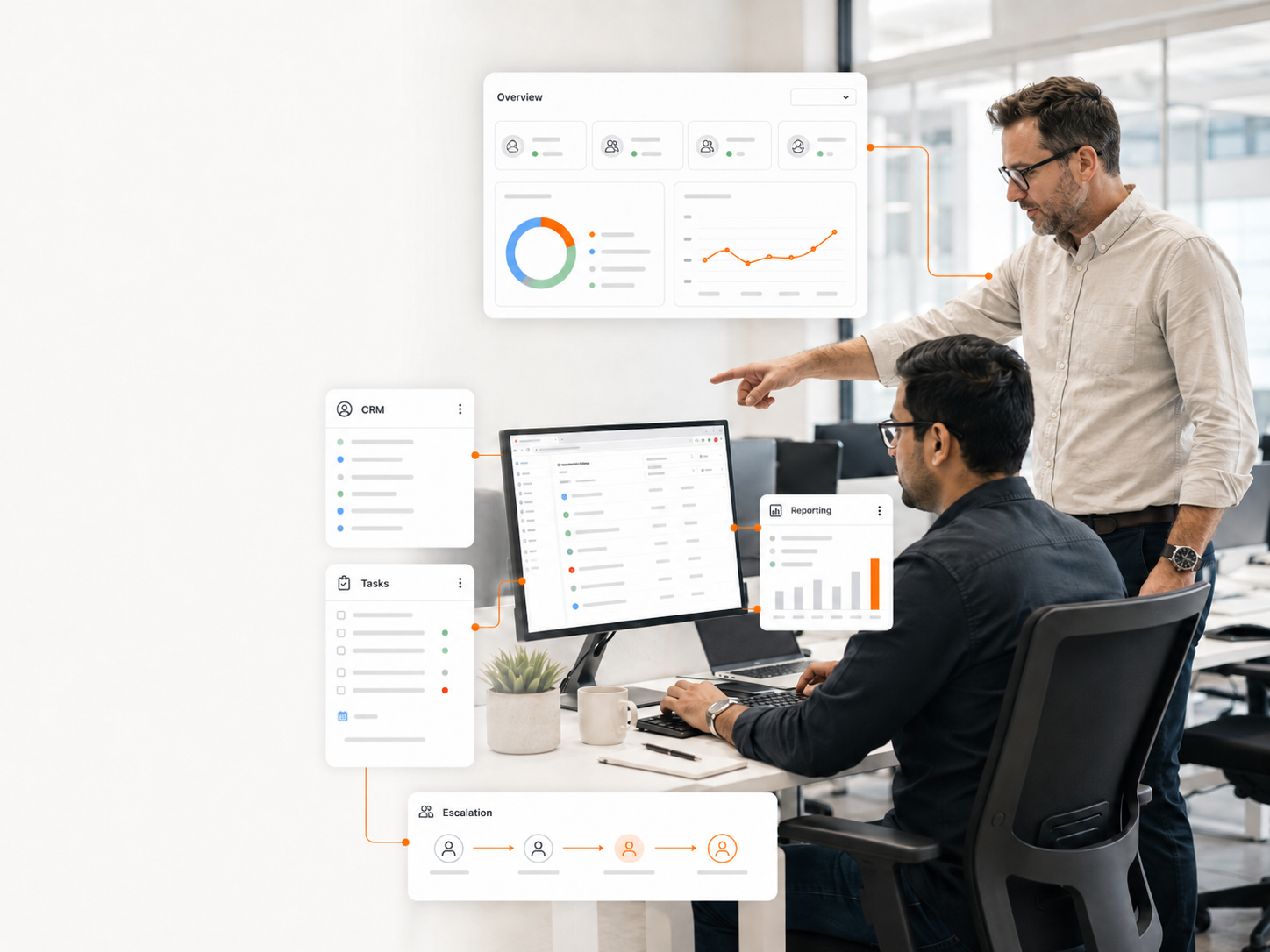
Where the existing environment remains appropriate, AGH can work inside it rather than requiring an unnecessary platform migration.
The client retains authority over system access, information access, approvals and the operating permissions made available to the team.
Issues outside the agreed authority are escalated through the defined route instead of becoming unapproved business decisions.
Managed remote operations should remain visible to management. Depending on the engagement, that visibility may come through client systems, tasks, reports, dashboards, client-approved KPIs, performance review, escalation and the AGH Workforce Management Platform where configured.
The objective is useful management information—not constant employee surveillance.
Use agreed systems and task information where relevant to the operating model.
Define the required reports, dashboards, KPI information and escalation visibility during Scope.
Against agreed responsibilities and client-approved expectations, with human management judgement.
No. Existing client systems can remain central where they are appropriate.
Not every engagement requires recruitment, multiple team members or the same technology. The seven stages remain the structure used to define what the specific engagement actually needs.
AGH structures the engagement, but the client provides the business context and management direction required to define the right operating model. The exact input depends on the service and should not become an unnecessary administrative project.
What the relevant function does, what is changing and where operational support is needed.
Existing responsibilities, SOPs or operating information where relevant to the agreed work.
The tools required for the work and the access client management approves.
Communication contacts, approvals, reporting, KPIs where relevant and feedback expectations.
Clear answers about the first consultation, scope, Build, onboarding, systems, visibility, expansion and pricing.
AGH reviews the business requirement, current workload, relevant team, systems, operational challenges and expected support so the requirement can be understood before the final service structure is defined.
No. The first consultation is designed to clarify the operational requirement. The appropriate service or engagement structure can then be defined from that requirement.
No. Recruitment is relevant where a dedicated person or managed team needs to be built. Project, setup, technology, website, data and other engagements may use Build to prepare a process, project environment, system or configuration instead.
Where selection forms part of the engagement, the client remains involved in approving the person who will support its operation. The exact selection process depends on the agreed role and engagement.
Yes, where appropriate and authorised. AGH first reviews the existing environment and can work inside relevant client systems and workflows rather than requiring unnecessary software replacement.
Depending on scope, onboarding can cover client systems, relevant training, SOPs, communication, workflow and approved access. The objective is to prepare the person or service environment to work inside the client's business context.
Depending on the engagement, visibility can come through client systems, task information, reports, dashboards, client-approved KPIs, performance review, escalation and the AGH Workforce Management Platform where configured.
No. Platform use depends on the configured engagement and client requirements. Existing client systems can remain central where they are appropriate.
Yes, where operational requirements justify it. Responsibilities, working hours, team members, workflows, supported functions, reporting or technology can be reviewed and expanded subject to revised scope where required.
AGH prepares a custom proposal based on the agreed operational requirements. Relevant factors can include the service, responsibilities, working hours, workload, team size, systems, equipment where relevant, reporting, management requirements and operational complexity.
The first consultation is designed to understand your business, workload, current team, systems and required support before the appropriate engagement is defined.