
Project Management Support
Keep projects moving without building a full internal PMO.
AGH provides structured operational support around projects. A dedicated Project Coordinator can work alongside your management and project team to keep tasks, meetings, deadlines, controls, documentation, reporting and visibility connected inside one agreed operating structure.
- Coordination
- Project Control
- Management Visibility
Why This Matters
Project momentum depends on what happens between the plan and the next decision.
A clear strategy can still lose momentum when actions, deadlines, meeting decisions, risks and project information are not consistently followed through.
Clearer Ownership
Tasks, responsibilities, deadlines and follow-ups stay visible so actions do not remain without an owner.
Better Project Control
Risks, issues, changes, decisions and overdue actions are structured instead of being left across emails and meeting notes.
Management Visibility
Reports and dashboards can provide a clearer view of progress, delays, priorities and next actions.
More Than Project Administration
A dedicated Coordinator works best when the project has a visible operating structure.
AGH Project Management Support can combine day-to-day coordination with the practical project-control structure needed to keep actions, documentation, reporting and management visibility connected.
Dedicated Project Support
A Project Coordinator supports the agreed operational workload around the project and helps keep work moving between meetings, owners, deadlines and reporting cycles.
- Project Coordinator
- Project Administration
- Stakeholder Follow-up
- Meeting Coordination
- Task Follow-up
- Agreed Reporting
Project Control Structure
Where required, AGH can help establish the operating structure around the work so project information is easier to follow, control and report.
- Project Setup
- Task & Timeline Management
- Meeting Management
- Risk & Issue Tracking
- Document Management
- Reporting & Dashboard Visibility
The Coordinator keeps the work moving. The structure keeps the project visible.
Dedicated Project Support
Operational coordination around the project — without removing client authority.
The Project Coordinator acts as an operational connection between plans, tasks, team members, meetings, deadlines, documentation and reporting.
Project Administration
Keep agreed project information, actions and recurring administrative work organised around the operating structure.
Stakeholder Follow-up
Follow up agreed actions and information with relevant participants so outstanding items remain visible.
Meeting Coordination
Connect meeting scheduling, agendas, minutes and action points back to project execution.
Task Follow-up
Keep owners, deadlines, status and dependencies visible and follow up overdue actions where required.
Information Organisation
Bring agreed project information into a clearer structure so participants can work from current information.
Agreed Reporting
Support recurring reporting based on the information and reporting scope agreed for the engagement.
Project Setup
Start from a shared project structure.
A project is easier to coordinate when the team has a common view of what is being delivered, who is responsible, which milestones matter and how work connects across the timeline.
Project Structure
Organise work into clear stages, work areas, responsibilities or deliverables based on the agreed requirements.
Project Scope
Create operational clarity around what is included, what is being delivered and what needs to be tracked.
Milestones
Identify major stages or outcomes so management can see whether the project is moving through expected phases.
Responsibilities
Make ownership clearer across participants so tasks, actions and decisions do not remain unassigned.
Timeline
Structure key dates, deadlines, milestones and dependencies into a visible project timeline.
Deliverables
Document and track agreed deliverables against the project structure so expected outputs remain visible.
Tasks, Meetings & Timeline
Turn project plans and meetings into visible actions.
The purpose is not simply maintaining a task list. AGH can help connect discussion, ownership, deadlines, dependencies, status and follow-up to the wider project structure.
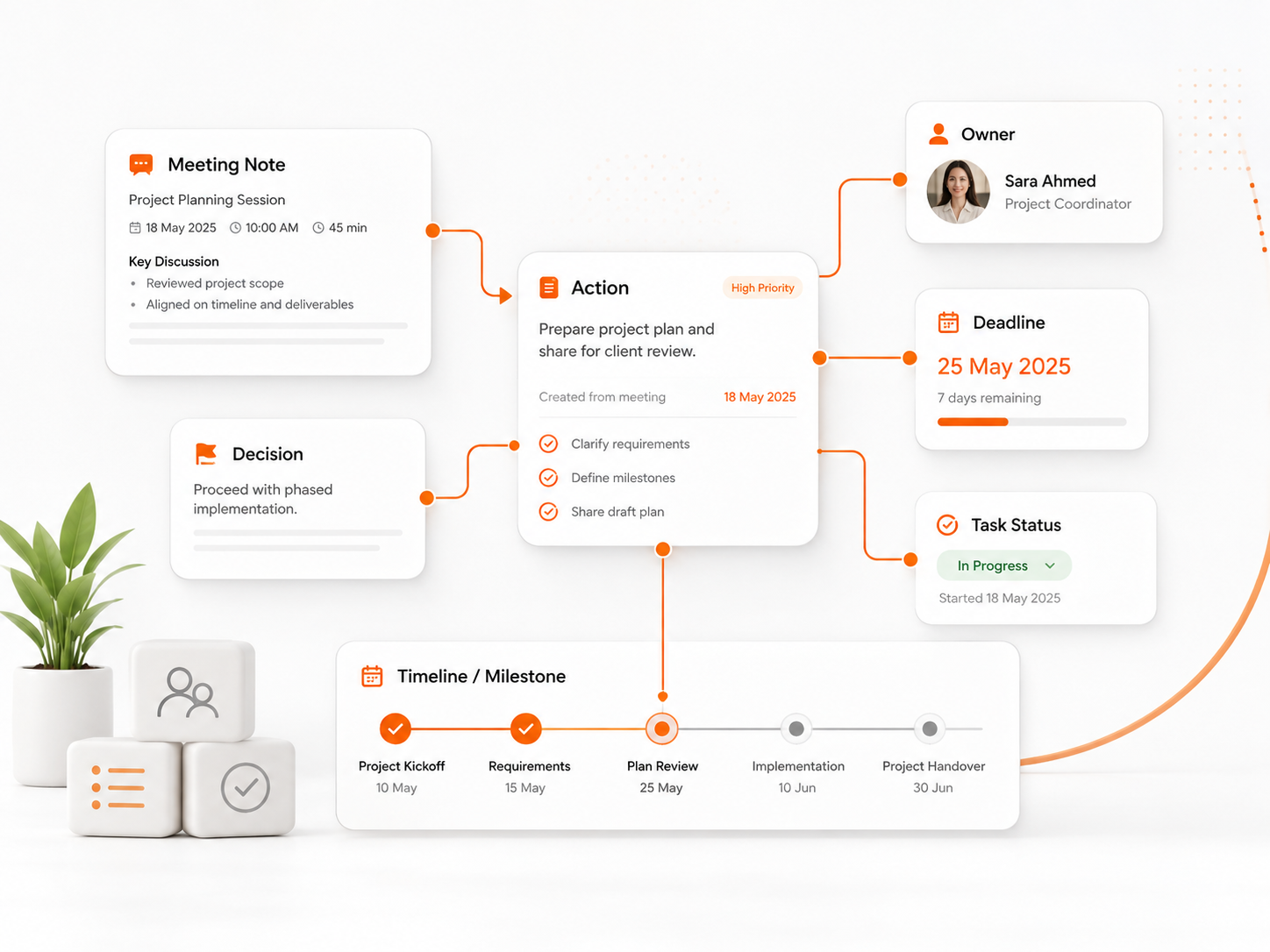
Keep actions connected to owners and deadlines.
Task Allocation, Deadline Tracking, Follow-ups, Overdue Tasks and Dependencies can be maintained as part of the agreed project-control process.
- Task
- Owner
- Deadline
- Status
- Follow-up
- Dependency
- Escalation
- Closed
Discussion should connect to execution.
Meeting Scheduling, Agenda, Minutes, Action Points and Follow-up can be linked so relevant discussion leads to a recorded decision or action where appropriate.
- Meeting
- Decision
- Action
- Owner
- Deadline
- Follow-up
Project Control
Keep project-control information visible — not buried in messages or memory.
Risks, issues, changes and important decisions can be documented and followed inside the agreed operating structure. AGH supports the record and follow-up process; authorised client managers retain strategic and final decision-making authority.
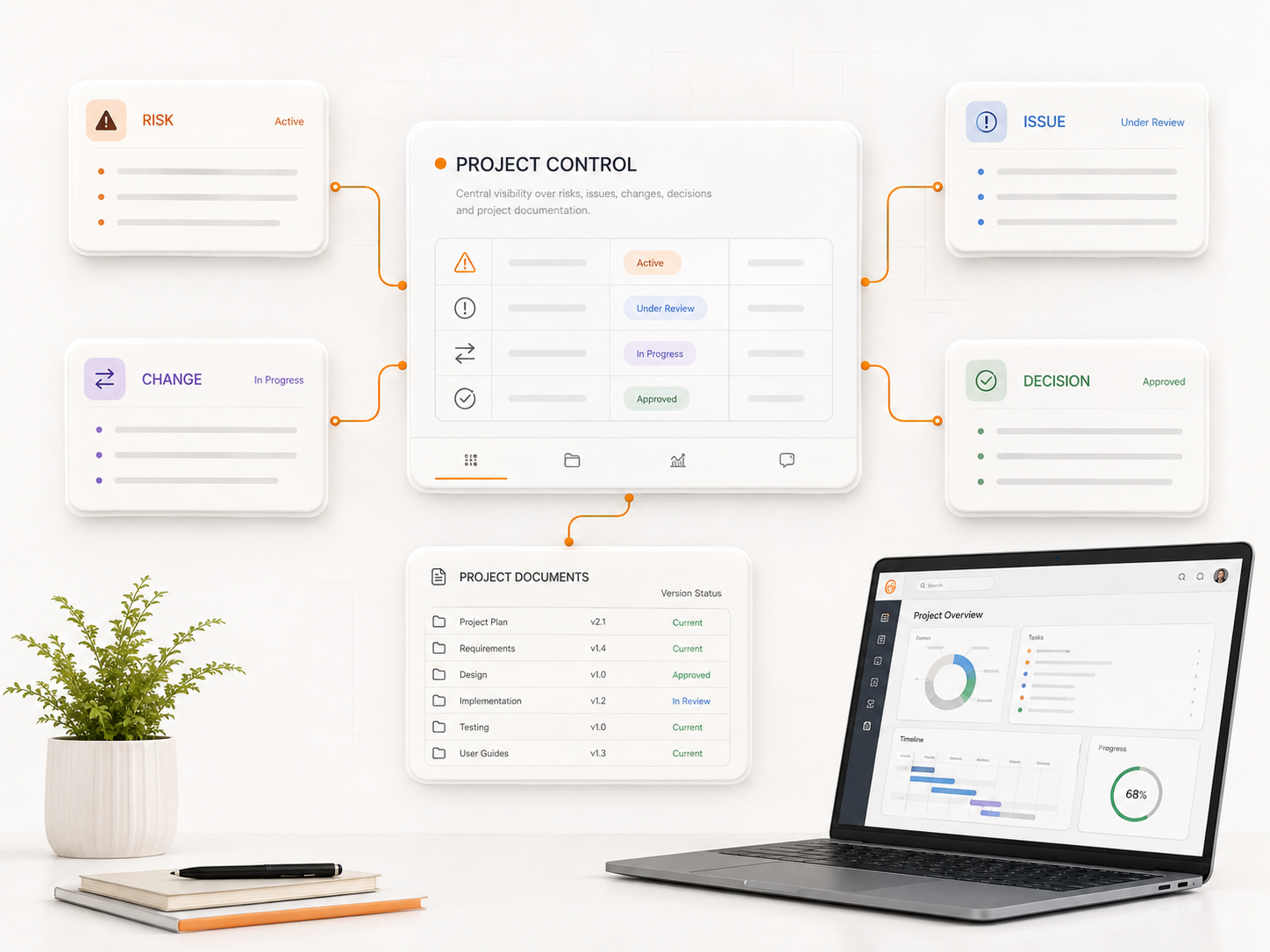
Risk Register
Document potential project risks and keep them visible for management review without transferring strategic risk ownership to AGH.
Issue Register
Record active project problems, assign follow-up where agreed, monitor status and escalate through the defined project process.
Change Tracking
Log relevant project changes so the team has clearer visibility over what changed, when it changed and what action may be required.
Decision Log
Record important project decisions so participants can refer back to what was agreed rather than relying on isolated conversations.
Document Management
Keep project information organised and current.
AGH can support an agreed document-handling structure without claiming formal regulatory or ISO document-control certification.
Project Files
Support a structured approach to storing and organising relevant project documents.
Templates
Use or establish agreed templates for recurring project documentation where required.
Document Control
Support agreed naming, filing, review and document-handling processes.
Version Tracking
Help reduce confusion between current and outdated document versions through a structured version approach.
Reporting & Project Dashboard
See the project without chasing every update.
Reporting can turn day-to-day project activity into clearer management information. A configured Project Dashboard can consolidate agreed project data so managers can review progress, delays, milestones, risks, issues and next actions from one clearer view.
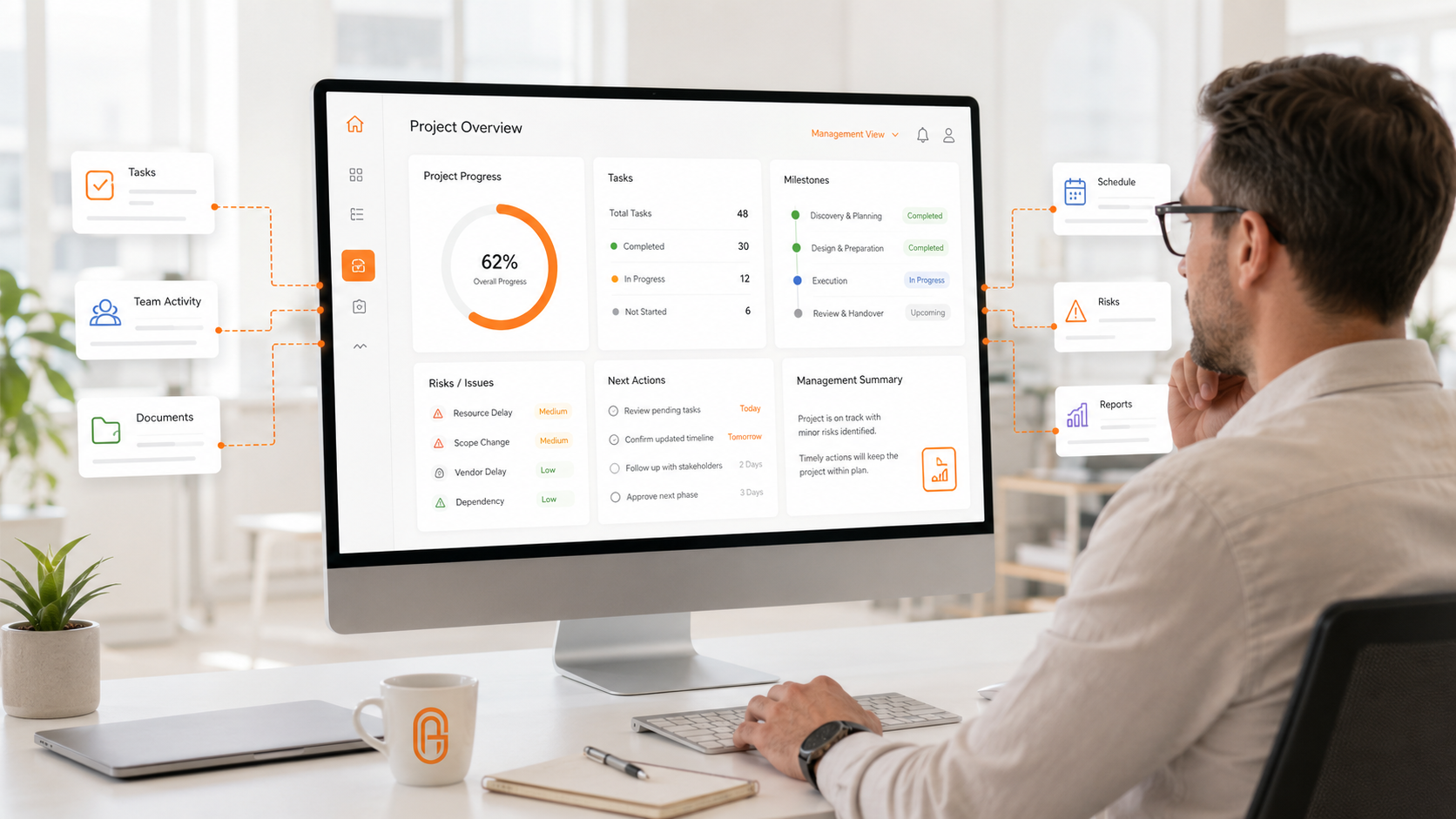
Weekly Project Report
A structured summary of relevant progress, actions, delays, issues and next steps based on the agreed reporting scope.
Management Summary
A concise view of the key project position without management having to review every individual task.
Progress Report
A structured view of progress against the agreed project structure, milestones and relevant activity.
KPI Tracking
Relevant project KPIs can be tracked where they have been defined for the engagement; AGH does not invent one standard KPI set for every project.
The dashboard supports project conversations and management decisions; it does not replace them.
How It Works
Define the support structure before the operating work begins.
The exact activities depend on the project and agreed scope. The operating sequence connects requirements, responsibilities, tools, controls and reporting before normal coordination is established.
- 01
Understand the Project
Review the project, stakeholders, existing systems, scope, current challenges and required support.
- 02
Define the Support Structure
Agree responsibilities, workflows, reporting, meetings, project controls, tools and communication.
- 03
Set Up the Environment
Prepare the agreed structure, tasks, milestones, documents, registers, dashboard and software environment.
- 04
Start Project Coordination
The Project Coordinator begins the agreed operational project-support activities within the client's environment.
- 05
Track & Report
Maintain task visibility, follow-up, project controls, documentation and reporting according to the agreed structure.
- 06
Review & Adjust
Review workload, project requirements, reporting needs and support scope as the project develops.
Systems & Technology
Use your project tools — or set up the structure you need.
AGH does not require a business to replace a suitable project-management environment simply to use the service.
Work in Your Existing System
Where appropriate, AGH can work inside the project-management environment you already use. The software names below are examples only and do not imply partnership, certification or preferred-vendor status.
Set Up a Suitable Project Environment
If an appropriate structure is not already in place, AGH can help configure a project environment around agreed requirements without implying custom software development.
- Project Structure
- Tasks & Responsibilities
- Deadlines & Milestones
- Statuses
- Reporting
- Dashboard
Who This Service Is For
Project support configured around the operating gap — not a one-size-fits-all PMO package.
Project Management Support is particularly relevant where the organisation already has project ownership but needs stronger operational coordination, controls, documentation or reporting capacity.
Growing Businesses Without a Full PMO
Add structured project-support capacity without necessarily building a large internal PMO function.
Internal Project Managers Needing Support
Add operational capacity around coordination, documentation, follow-up, meetings and reporting while the Project Manager retains authority.
Multi-Project Environments
Support managers coordinating several projects where clearer operational control and follow-up are required.
Fragmented Project Information
Bring tasks, files, meetings, decisions and updates into a clearer agreed structure when information is spread across channels.
Projects Requiring Better Reporting
Give management a clearer view of status, delays, milestones, risks, issues and next actions.
Flexible Engagement
Use the components your project actually needs.
Project Management Support can be configured around what is already working inside your business and where additional project-support capacity is required.
AGH does not publish fixed Project Management Support packages or public prices.
- Project scope and duration
- Working hours and required coordination level
- Number of stakeholders and projects
- Existing software and system-setup requirements
- Reporting, dashboard and documentation requirements
- Project complexity
Frequently Asked Questions
Common questions about Project Management Support.
Key points about coordination, systems, client authority, dashboard visibility and commercial scope.
Depending on the agreed scope, support can include Project Administration, stakeholder follow-up, meeting coordination, task follow-up, information organisation and agreed reporting. The Coordinator works within the client's project structure rather than automatically replacing the client's Project Manager or Sponsor.
No. AGH supports the agreed operational project-support layer. Strategic direction, approvals, budget decisions, technical decisions and final project authority remain with the client's authorised managers.
Yes, where appropriate. AGH can work inside an existing project environment such as ClickUp, Monday.com, Asana, Trello or Microsoft Planner. These are examples only and do not imply formal software partnerships.
Where required, AGH can help configure a suitable project environment around agreed requirements such as tasks, responsibilities, deadlines, timelines, milestones, statuses, reporting and dashboard structure. This does not automatically mean custom software development.
Confirmed dashboard areas can include Project Progress, Completed Tasks, Delayed Tasks, Milestones, Risks, Issues and Next Actions. The exact dashboard depends on the agreed project information and reporting requirements.
Potentially, yes. The engagement can be structured around one or multiple projects depending on workload, working hours, stakeholder requirements, reporting needs and the level of coordination required.
No. The support structure is configured around the project. A client may need a Project Coordinator, project setup, task coordination, meetings, project-control registers, document management, reporting, dashboard, system setup or a relevant combination.
AGH prepares a custom proposal based on project requirements. Relevant factors can include scope, duration, working hours, coordination level, number of stakeholders or projects, existing software, system setup, reporting, dashboard, documentation and project complexity.
Next Step
Add the project structure your team needs to keep moving.
The first conversation can review your current project, existing structure, workload, team and stakeholders, current software, reporting requirements, main coordination gaps and the support you actually need.